Let’s Move! New Moves Club
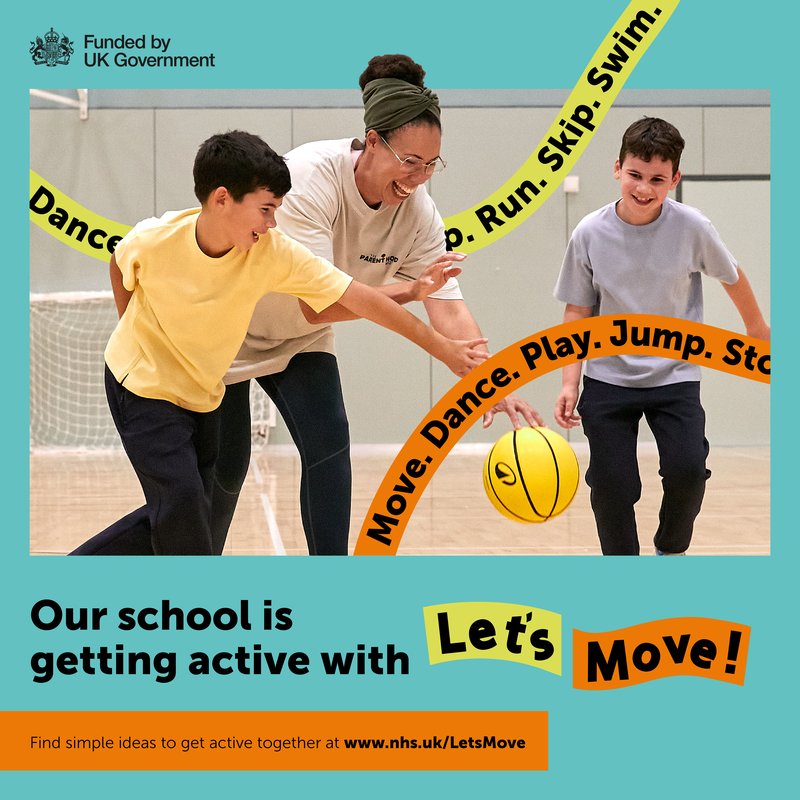
Let’s Move! is back with resources for teachers and school leaders - designed to help pupils and families discover simple, fun and flexible ways to keep active through trying something new together.
Campaign details
Related website
NHS Let's Move website
Target audience: Parents and children, Students and teachers
Topics: Schools, Physical activity
Campaign start date: 8th October 2026
Campaign end date: Always on
Overview
Let’s Move! is a government campaign which aims to help families discover simple, fun ways to get moving every day with their children.
This year, it’s all about the New Moves Club theme, encouraging families to give something new a go together. Starting with just 10 minutes of activity a day can make a real difference, helping children build towards the NHS-recommended 60 minutes of physical activity each day.
The focus isn’t on being the best. It’s about having a go, building confidence and enjoying the laughs, wobbles and moments of pride that come from trying something together. When parents join in, children feel more confident, engaged and willing to keep going.
Use these New Moves Club resources to help pupils get active at school and encourage families to keep moving at home. Teachers can introduce the campaign through simple 10-minute movement activities in class, helping pupils build confidence and try something new before taking home a badge-based activity sheet to share with their families.
The activity sheet is to be printed for pupils to take home and complete with their families, colouring in each badge as they go. To get pupils excited about trying new moves, teachers can use the four activities below to help pupils get moving in school, with curriculum links included to support classroom planning. By trying these activities in class first, pupils can build confidence, explore new moves and feel ready to continue the fun with their families at home.
Class activities and curriculum links
The swap move: In groups, pupils create a simple set of movements or an active mini-game. They then teach it to another group with step-by-step instructions. Swap roles so each group has a chance to lead.
Curriculum links:
PE:
● develop flexibility, strength, technique, control and balance
English spoken language:
● give well-structured descriptions, explanations and narratives for different purposes
● participate in discussions, performances
PSHE/Relationships education:
● teamwork, respectful communication, recognising others’ strengths.
The movement memory game: In small groups or as a class, a pupil starts with a movement. Each pupil adds a move to the sequence. Pupils can record the sequence using symbols, drawings or a method of their choice. They can even perform it back at the end if they wish!
Curriculum links:
PE:
● master basic movements including running, jumping...developing balance, agility and co-ordination
● use a range of movement patterns
English – Spoken language
● listen and respond appropriately to adults and their peers
PSHE/Relationships education:
● teamwork, respectful communication
Soundtrack statues: Pupils move freely around the space in response to music. When the music stops, pupils freeze in a balancing pose and hold it for five seconds. Add challenge by asking pupils to create linked poses with a partner or group, or to change their movements to match the tempo, mood or rhythm of the music.
Curriculum links:
PE:
● develop flexibility, strength, technique, control and balance
● perform dances using a range of movement patterns
Music:
● listen with attention to detail and use sound to increase aural memory
Story movers: Pupils choose a character from a story, book, programme or film and create movements to show how that character travels, reacts or behaves. In pairs or groups, they build a short movement sequence for others to watch, guess and discuss what is happening in the story.
Curriculum links:
PE:
● perform using a range of movement patterns
● develop flexibility, strength, technique, control and balance
● compare their performances with previous ones and demonstrate improvement to achieve their personal best
English spoken language:
● use spoken language to develop understanding through speculating, hypothesising, imagining and exploring ideas”
English reading comprehension:
● drawing inferences such as inferring characters’ feelings, thoughts and motives from their actions
Resources
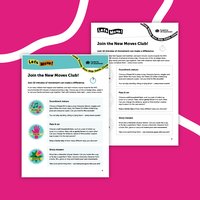
Let’s Move! New Moves Club take-home activity sheet for families
A printable take-home activity sheet with six badge-based movement activities for pupils to enjoy with their families at home
Last updated: 6 October 2026
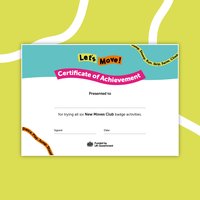
Let’s Move! New Moves Club family activity sheet certificate
Present this certificate to pupils, or send it home digitally, so families can celebrate giving it a go!
Last updated: 6 October 2026
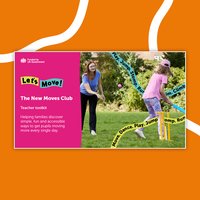
Teacher toolkit
A PDF designed to help schools encourage families to join the New Moves Club
Last updated: 6 October 2026
Published: 2 October 2026